Repair Assistants As the Better Wearable Acceptance Route

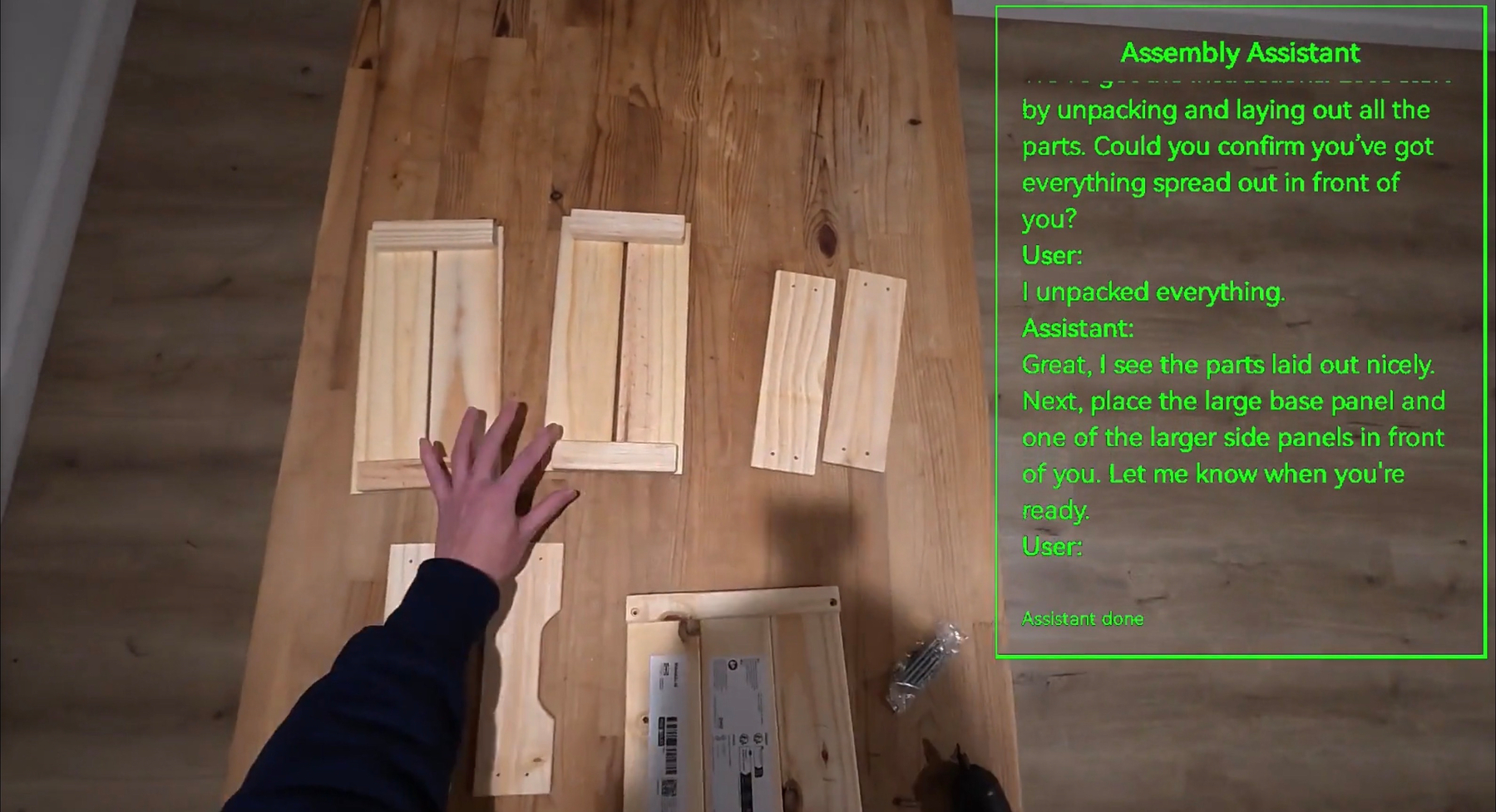
Between the newly announced iFixIt Bot and this inventive use case of a HUD for assembling IKEA products, one could imagine a nearly interesting scenario where a wearable/interface which provokes one to be less wasteful being a easier route for this tech’s acceptance than the translation, media consumption, and notification triage routes.
A problem with wearables, for the non-techie, is that they don’t seem to solve a low-enough hanging fruit. Sure, being a memory aide is not a problem. But, folks would like to think they are less forgetful than they are (until forgetfulness becomes a more prominent characteristic of age/ability). Some would like to believe they are skillful conductors of parts of their workflow, but neglect other governance/regulations which might be the larger boxes in which they play. So, augmenting against an achievable, controllable state of maturity can point to something a bit harder to pull off, but much more accessible.
Thing is, and the iFixIt Bot post explains this nicely, going the route of “make it mature and accessible” isn’t a small thing. It’s digging to the characteristic of “original” inside of a larger cake of innovation. And then when it hits that accessible, usable, and “can’t live without it but it’s not exactly desirable” layer, one is convinced of its value and utility without much more of a narrative. Going from “part of the production” to “desired program asset” is where many want wearables to go, but there’s still too much in the way of “setup the ideal scenarios” for what amounts to “not enough value.”
But assembly and fix-it materials? Oh that could do it. Add the layer of economic and political pressures to not just do more with less, but understand how to make the appropriate substitutions… it’s not just that folks “might” wear that. They might even fix the world around them… themselves.